
After weeks of testing, I still haven’t found the limits of Astra’s musical capabilities. Every day, I discover something new that feels like it should be impossible. Many of these discoveries deserve full write-ups, but things are moving too fast to cover everything, so here are the highlights:
Astra engraved a new edition of Weber’s Symphony No. 2, which is available on IMSLP. It also wrote a preface detailing its engraving process and editorial approach, available on GitHub.
Astra made its own score video of the new edition, which you can watch on YouTube.1
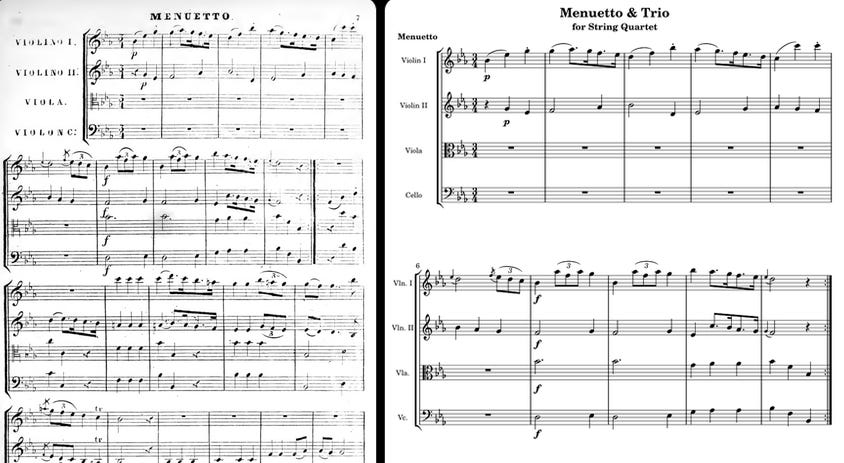
Astra engraved a Haydn minuet as I recorded my screen. The video shows every prompt, along with Astra’s reasoning as it turned the smudged score on the left into the crisp new LilyPond engraving on the right. Prompts and files are on GitHub.
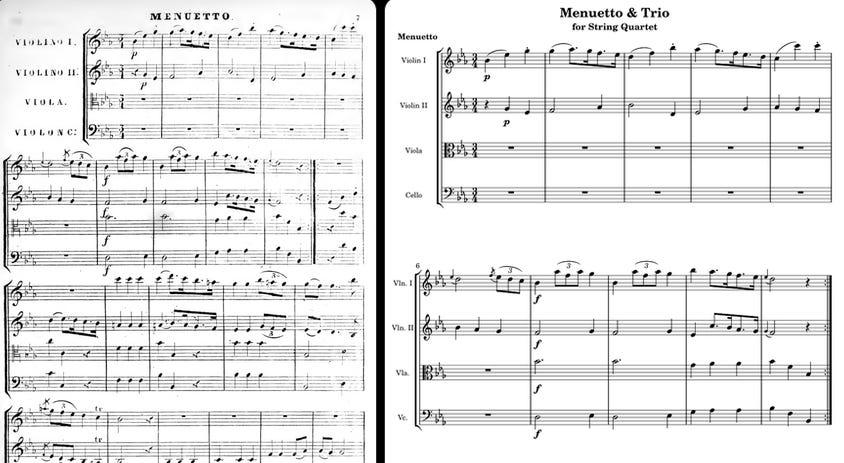
Haydn: String Quartet in E-flat major, Hob. III:2 — Left: original engraving. Right: Astra’s engraving.
After Astra’s release, a flood of new models followed: Jev, Grok 4.7, Opus 5.5, and more. I haven’t tested them all, but of the models I’ve tried, Opus seems to be the only one that can challenge Astra at the frontier, so that’s where I’ll be focusing today.
Claude Opus 5.5
Error Detection Test
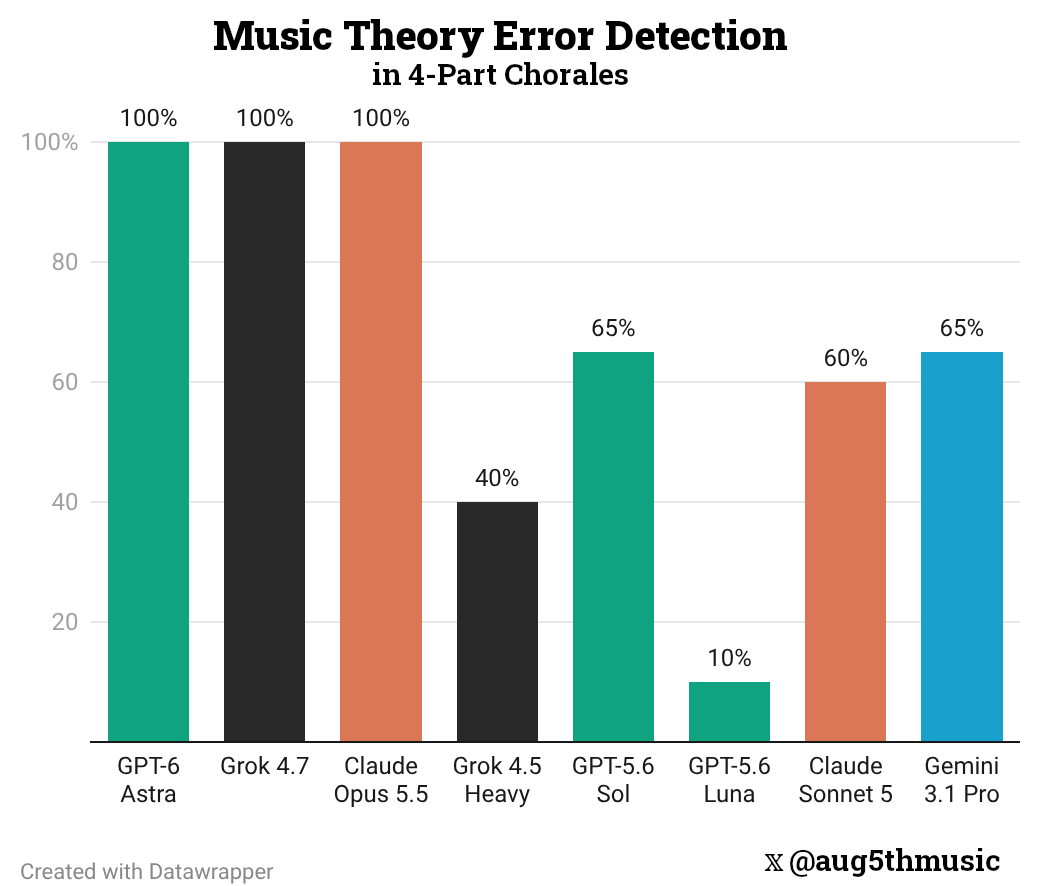
GPT-6 Astra previously scored 100% on this test, and now Opus 5.5 and Grok 4.7 have done the same. I guess I shouldn’t be surprised, as my benchmarks never seem to last very long. But this signals to me that LLMs are ready to move on from standardized tests and take on more substantial challenges, such as formal analysis and free composition. So expect more of those in the future.
Bach Benchmark
I tested Opus 5.5 on the Bach Benchmark twice: first on the default setting, then again on Extra High effort, the same setting I used for Astra. Opus’s default-setting chorale is subpar, but I’m including it here so readers can see how much these settings affect output.
Opus 5.5 — Default Setting

Opus 5.5 — Extra High Effort
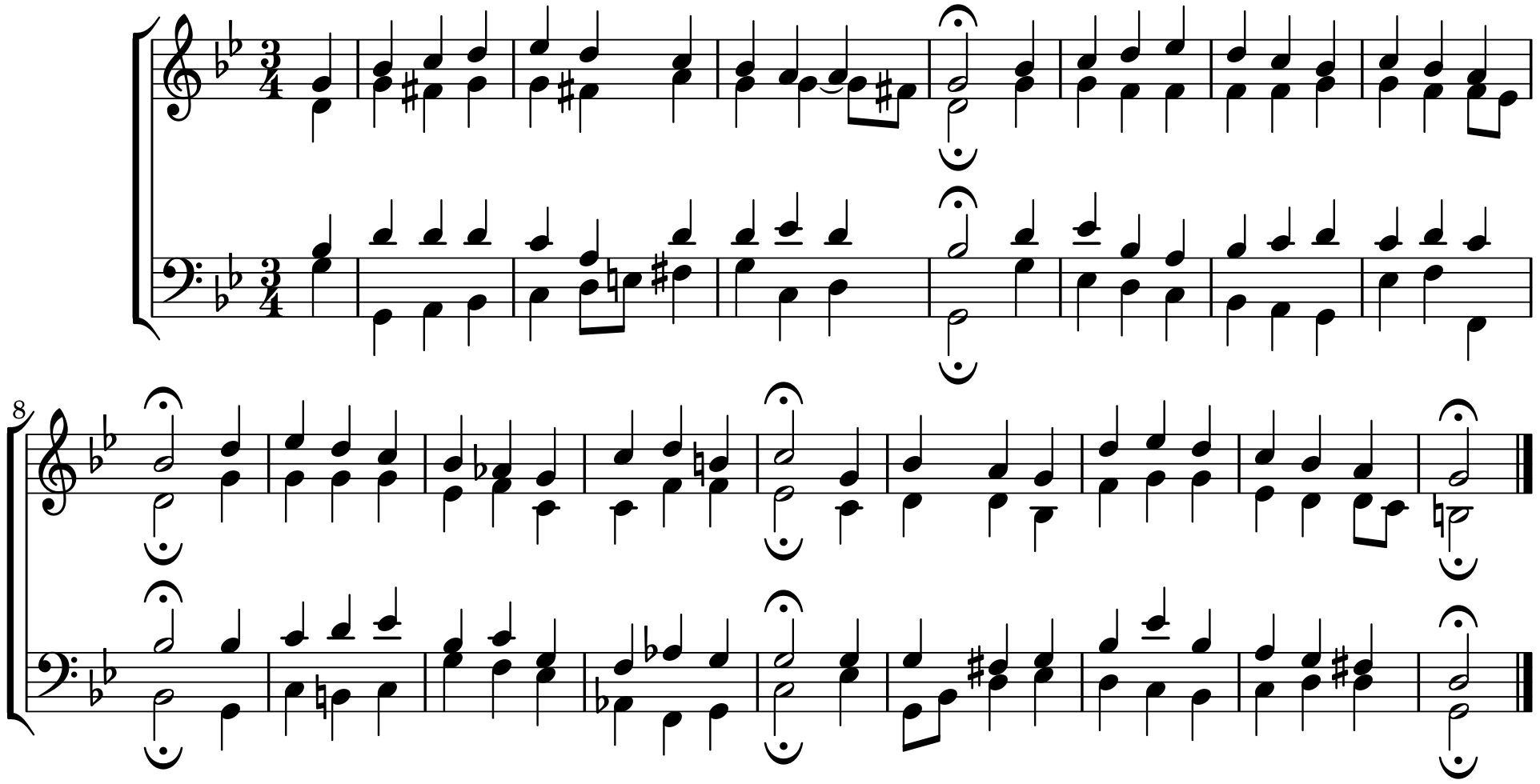
Prompt: “In LilyPond (version 2.24), write a 4-part chorale in the style of Bach, 3/4 time, G minor. Use two staves -- soprano and alto on the top staff, tenor and bass on the bottom staff. Respond with only the code block.”
The default-setting chorale is forgettable, but the Extra High one is a real winner. In fact, it’s on par with Astra’s earlier effort, featuring the same technical competence and harmonic sophistication. It also hews a little closer to Bach’s style. Take, for instance, the stepwise motion in the bass:


This sort of line requires careful planning, as an ascending stepwise bass tends to call for contrary motion in the upper voices (i.e., if the bass ascends, the others descend). With the voices converging, a bass can only ascend so far before it meets and crosses the other voices, which is generally undesirable. In the chorale pictured above, Bach gets around the problem by having the soprano follow the bass in parallel thirds for four beats, then fall back to earth.
Opus’s first phrase does something similar: the soprano rises with the bass in thirds for four beats, then descends by step:

A maneuver like this looks simple (and musically, it is), but it was too complex for previous generations of LLMs. They seemed to plan entirely chord by chord, optimizing only for local voice-leading, which resulted in awkward bass lines and stilted inner parts. Opus’s stepwise bass, on the other hand, shows a degree of horizontal thinking we haven’t really seen before. It suggests that Opus is planning across whole bars and phrases rather than single pairs of chords.
Another pattern I particularly enjoyed was the cadential figure in measure 3. This figure, one of Bach’s favorites, turns up again and again in his chorales:
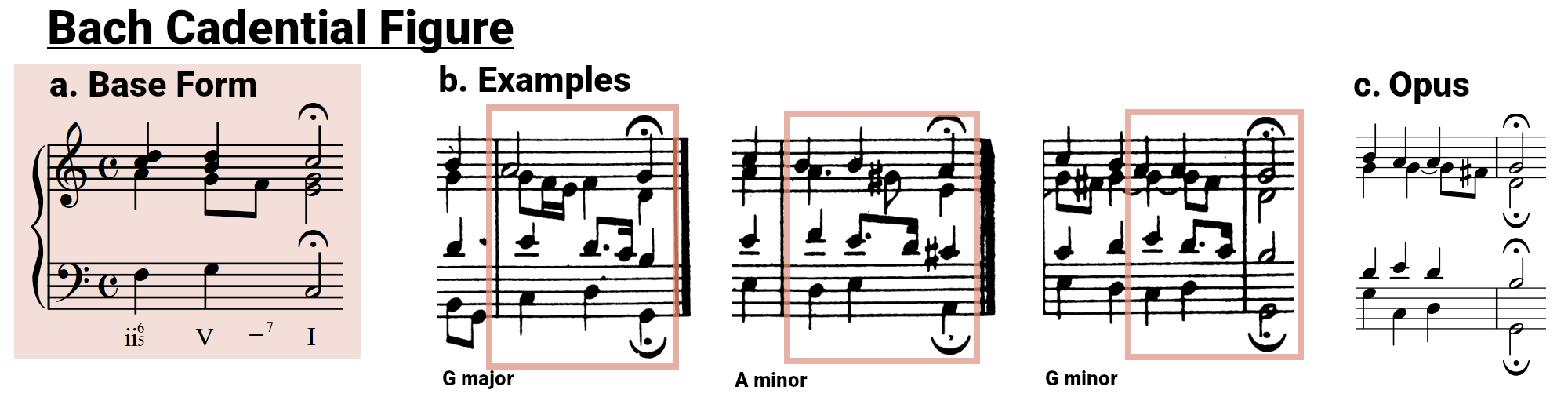
Opus’s version is nearly identical to the last example above. Only the seventh of the dominant chord is missing, likely because it would require a sixteenth note. No LLM has yet written a sixteenth note on the Bach Benchmark, and considering how recently we started seeing eighth notes, that milestone could be a long way off.
As for flaws, there are still plenty to be found, especially in the chorale’s latter half. Opus has problems with first-inversion chords in particular, inserting them where they don’t belong and doubling the third where it doesn’t make sense. Its writing also includes the occasional strange harmony and traces of the awkward bass lines that typified LLM output until very recently:

But these flaws pale in comparison to the errors of yesteryear. Opus’s bad decisions look less like the flailing of a first-year student and more like the choices of a lesser composer. In the next generation of models, such flaws could be a thing of the past.
Opus vs. Astra
So which chorale is better? The truth is, it’s a matter of taste. Frontier models are making fewer errors these days, which makes it harder and harder to judge their music objectively. To my ear, Opus and Astra are equally talented composers, and their chorales are the best we’ve seen on the Bach Benchmark so far. I say they’re tied for first place.
Musical Wonders
In my last article, I said that Astra had performed impressive musical feats. I had intended to write more about these, but as time has gone on, I’ve felt less and less inclined to do so. For one thing, there are just too many of them. More importantly, any thorough analysis would have to address the music’s flaws, and LLMs are now good enough at composing that pointing out flaws feels increasingly like nitpicking. If the music is good, why not just enjoy it?
And that’s exactly what I’ve been doing. For the past few days, I’ve been listening to Astra’s and Opus’s compositions almost exclusively. My current playlist is made up of their sonatas and concerti, all generated within the past month, and some within the past day. When I look at these new musical works piling up on my hard drive, I feel a sense of wonder. Beauty now appears out of thin air; we can summon it whenever we want, in whatever styles and quantities we choose. Are we entering an age of abundance? I don’t know, but it’s starting to feel that way.
Video Showcase
As you watch the videos below, ask yourself: Is this good music? Do I enjoy listening to it? Would I add it to a playlist? Let me know what you think in the comments.
[Note: All prompts were run on Extra High effort. The models created the MIDIs themselves, which I then exported to MP3 in MuseScore.]
Baroque Fugue
Claude Opus 5.5:
Prompt: “In LilyPond (version 2.24), write a complete fugue for organ in the style of Bach.”
GPT-6 Astra:
Prompt: “In LilyPond (version 2.24), write a complete fugue for organ in the style of Bach.”
Baroque Flute Sonata
Claude Opus 5.5:
Prompt 1: “Use this figured bass as the starting point for a flute sonata movement in the Baroque style. Use two staves for the basso continuo and one for the flute. Respond with only the code block. [code]”
Prompt 2: “Your code is broken. We've run into problems before where >> and << get dropped.”
[Note to self: Always let Claude compile its own LilyPond code.]
Prompt 3: “Write the second movement to the same sonata. Plan for a total of four.”
Prompt 4: “Write the third movement.”
Prompt 5: “Write the fourth movement.”
GPT-6 Astra:
Prompt 1: “Use this figured bass as the starting point for a 16-bar trio sonata movement in the Baroque style. Use two staves for the basso continuo and one for the melody (treble clef). Respond with only the code block. [code]”
[Note: I accidentally prompted Astra to write a trio sonata with only one melody instrument. Oops.]
Prompt 2: “Compose an allegro to follow this movement.”
Prompt 3: “Compose a largo, the sonata’s third movement. The movement after this, the fourth, will be the last.”
Prompt 4: “Compose the fourth and final movement. Use as many measures as you see fit.”
“Ode to Canon”
GPT-6 Astra:
Prompt: “In LilyPond, combine Beethoven's Ode to Joy and Pachelbel's Canon in D to create a new original work. Use at least 4 staves. There are LilyPond files of both pieces in this directory.”
Trio Sonata (Largo)
Claude Opus 5.5:
Prompt: “In LilyPond, write the opening largo movement of a trio sonata in the style of Corelli. Use a major key and a variety of suspensions. Use three staves: one for each violin and two for the bass continuo.”
[Note: I accidentally prompted Opus to use the wrong number of staves. Oops. Luckily, it figured out what I wanted.]
Retro RPG Battle Music
GPT-6 Astra:
Prompt 1: “In LilyPond, write chiptune battle music for a retro RPG.”
Prompt 2: “Turn this into a score video. Add pixel art characters to the margin of the screen that look like 8-bit RPG characters (seen in profile as in a battle screen). Also have them do occasional attack and spell-casting animations as though engaged in battle. Use appropriate sound effects for the attacks and spells and have retro pop-up windows appear with text saying how much damage they did (“Fire did 32 damage!”). It’s okay if this occludes the sheet music at times. Make it epic.”
[Note: Yes, Astra did all the sprites and animation for this video.]
I hope you enjoyed the Opus and Astra showcase. If you want more content like this, follow me on X @aug5thmusic, where I post regularly about AI and music. Also check out my new YouTube channel, where I’ll be posting more videos like these from time to time.
I didn’t know Astra could make score videos until @agheieff_ showed me on X. He used Astra to write a 30-minute symphony, engrave it in MuseScore, and create a score video, available on YouTube.
Opus 5.5 is a breakthrough.
Yet, can it find novelty. Copying and improving on existing form was always going to happen.
While all work is derivative to one degree or another when might we see a Beethoven moment. Something that changes the course of music. Bartok and Shostakovich also come to mind.
AI is extremely good at math. Human hearing is limited. What might music be to an entity that can hear the full spectrum aka a robot. What Music might that entity be able to make.
Humans improve what they hear with training perhaps we might find something new in the electrons. What might that sound like.
Just a thought.
How good would it be at something "completely new"? I.e. something Baroque or Classical but not "in the style of Bach" etc. Something that would feel like a rediscovered lost composer.